Wit
The Edge of the WorldWit is a practical and observant father whose support becomes clear when Ollie comes home asking for help. In a conversation about Ollie’s new relationship and his own need to get better, Wit does not offer an easy fix: he listens, tries to understand what has changed, and insists that recovery must belong to Ollie himself.
Family Presence and Character
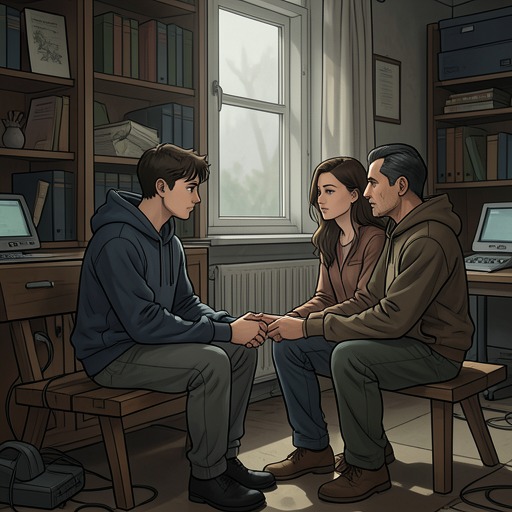
Wit sits with Ollie and Jannah in the family living room, close enough for Ollie to sense their presence, though neither parent touches him; since the accident, they have learned not to. The careful distance frames Wit’s support as attentive rather than intrusive. He is there beside his son, but he does not presume that closeness means knowing what Ollie needs.
Practical Questions and Misreadings
When Ollie says he has met someone and is trying to make the connection more than a friendship, Wit rises and studies his reflection in the fireplace mirror, running a large hand through his dark hair as he works to understand the news. His practical instincts lead him first to ask where Ollie met the boy and whether he is a musician. When Ollie explains that he is in the band touring with him, Wit tries to connect this revelation to the plea for help that brought Ollie home.
Wit also proposes taking Ollie to the place at Gubałówka, an attempt to offer a concrete answer to a problem Ollie cannot yet name. Ollie rejects the idea of going up a mountain to find himself: he knows he is present, but also that he cannot manage everything alone. Wit’s suggestion shows his impulse to help, even when the form of help he imagines does not fit what his son is asking for.
Support Without Substitution
After Jannah leaves the room, Wit takes her place and tells Ollie that his parents have always wanted to help. He does not treat that willingness as a solution in itself. Instead, he asks what has changed and challenges the possibility that Ollie might be trying to get better only for the person he has met. Recovery, Wit says, has to be for Ollie. When Ollie answers that it is, Wit asks whether he is sure.
That final question keeps Wit’s care from becoming simple reassurance. He recognizes that a new relationship may have prompted Ollie to seek help, but presses him to locate the decision within himself. The exchange presents Wit as both practically minded and emotionally perceptive: he cannot name what Ollie needs for him, but he makes space for the frank conversation in which Ollie begins to say it.